AI-Driven Therapeutics for Antibiotic-Resistant Infections & Sepsis
The Challenge
Antibiotic resistance is one of the greatest threats to global health. The World Health Organization has identified critical priority pathogens including Neisseria gonorrhoeae, Acinetobacter baumannii, and Pseudomonas aeruginosa that urgently need new treatments.
700K+
Annual deaths from drug-resistant infections
11M
Annual deaths from sepsis worldwide
$100B
Global antibiotic market by 2030
$62B
Annual US healthcare costs from sepsis
Our Solution
Febris Therapeutics is developing AI-designed therapeutics targeting novel essential bacterial proteins involved in outer membrane assembly—critical machinery present in all Gram-negative bacteria. Our proprietary platform addresses both bacterial infection and the sepsis cascade.
Dual Mechanism of Action
Direct bacterial inhibition: Targets essential proteins required for bacterial survival
Pan-bacterial activity: Conserved target across multiple Gram-negative pathogens
Resistance-proof design: Targeting essential machinery limits resistance development
Why Our Target?
Essential for survival: Required for bacterial outer membrane assembly and viability
Validated druggability: Multiple inhibitor classes confirm target is accessible and drug-responsive
Sepsis prevention: Target inhibition reduces LPS release, blocking the sepsis cascade at its source
Broad-spectrum potential: Highly conserved across all Gram-negative bacteria
Sepsis Prevention: A Critical Unmet Need
Sepsis—the body's overwhelming inflammatory response to infection—kills 11 million people annually and costs the US healthcare system $62 billion per year. Despite decades of research, no effective sepsis therapeutics exist that target the root cause.
The LPS-Sepsis Connection
Gram-negative bacterial infections trigger sepsis through the release of lipopolysaccharide (LPS), also known as endotoxin. When bacteria die—whether from natural causes or antibiotic treatment—they release massive amounts of LPS, triggering a cytokine storm that leads to:
Systemic inflammation and multi-organ failure
Septic shock and cardiovascular collapse
30-50% mortality rate despite intensive care
$62B annual healthcare costs in the US alone
Our Approach: Prevention at the Source
Rather than treating sepsis after it develops, our therapeutics prevent LPS release by targeting essential outer membrane assembly proteins. By inhibiting this critical bacterial machinery:
✅ Bacteria are killed without lysing (controlled cell death)
✅ LPS remains sequestered within dying bacteria
✅ Sepsis cascade is prevented before it starts
✅ Dual benefit: Antibacterial effect + sepsis prevention in one therapeutic
Market Impact: This dual mechanism positions our therapeutics uniquely for both antibiotic-resistant infections ($100B market) and sepsis prevention ($4.2B market growing to $8.6B by 2030).
Technology Platform
AI-Powered Drug Discovery
Our proprietary approach combines artificial intelligence with computational molecular docking to design and validate novel therapeutics with unprecedented speed and accuracy.
AI Sequence GenerationComputational DockingStructure-Based DesignMulti-Species Validation
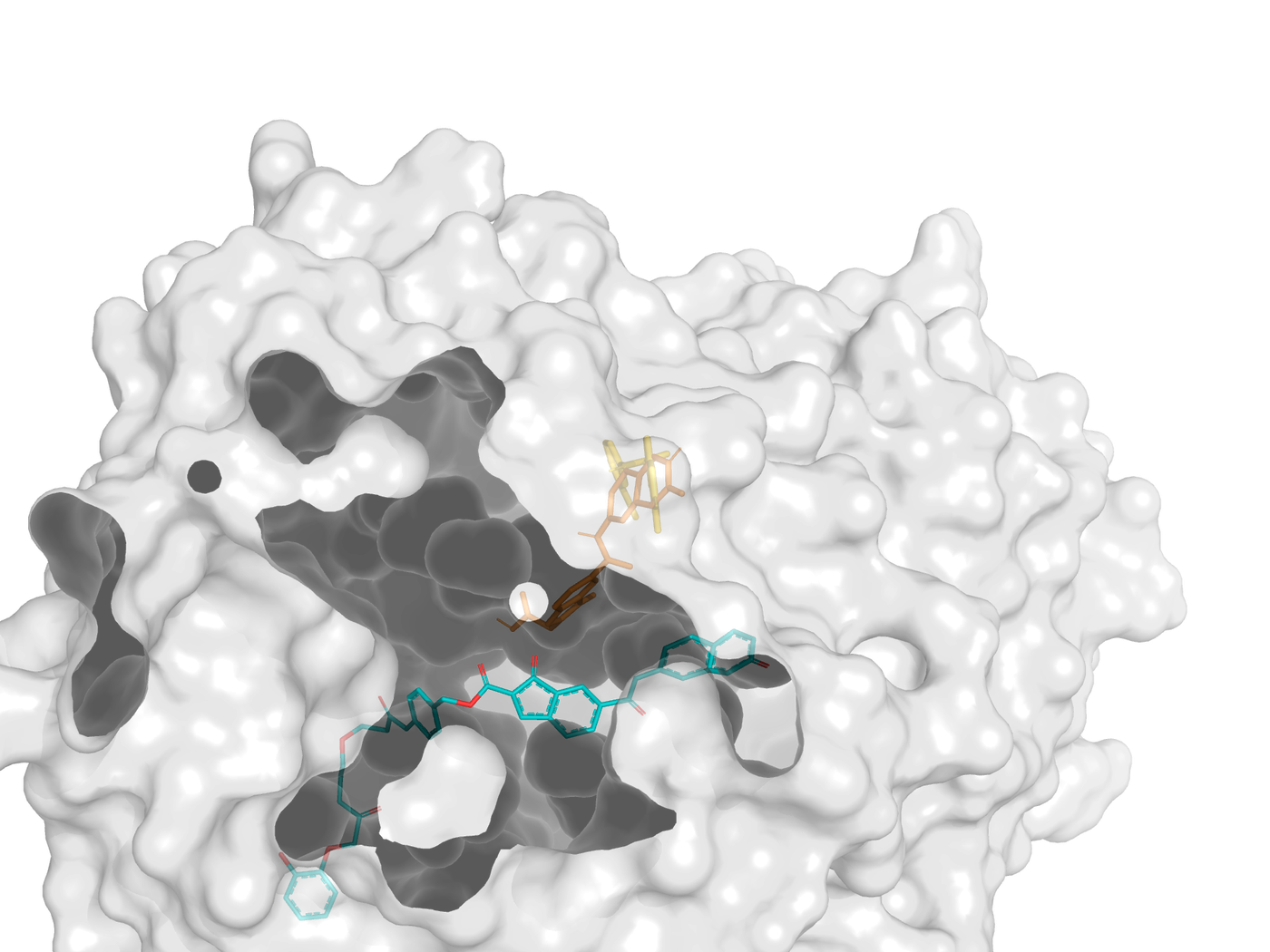
AI-designed therapeutic bound in the active site of an essential bacterial enzyme. Molecular surface (white) with active-site cavity (black); the Febris-designed small molecule (cyan) is held in place by the binding pocket. Computational model.
Our Therapeutic Approach
Febris Therapeutics employs a proprietary class of therapeutics designed to bind bacterial targets with high affinity and specificity. Our platform offers significant advantages over traditional antibiotics:
Rapid development: AI-accelerated design reduces development time from years to months
Secondary Benefit: Sepsis prevention through LPS neutralization
Stage: Computational validation complete, advancing to experimental validation
Preclinical Validation:
Validated against 8 WHO priority and biodefense pathogens across multiple drug-resistant species
Lead candidates demonstrate pan-species activity across all 8 organisms
50 ns molecular dynamics simulations confirm binding stability of lead compounds
Resistance-bypass confirmed: Lead candidates retain full activity against dominant clinical resistance mutations, establishing an evolutionary trap against resistant strains
Targets several distinct, conserved essential bacterial structures with low mutation tolerance
Multi-modality approach: small molecules, cyclized peptides, and nucleic acid-based inhibitors in active development
Wet-lab validation: Lead compounds advancing toward MIC testing and antibacterial activity profiling
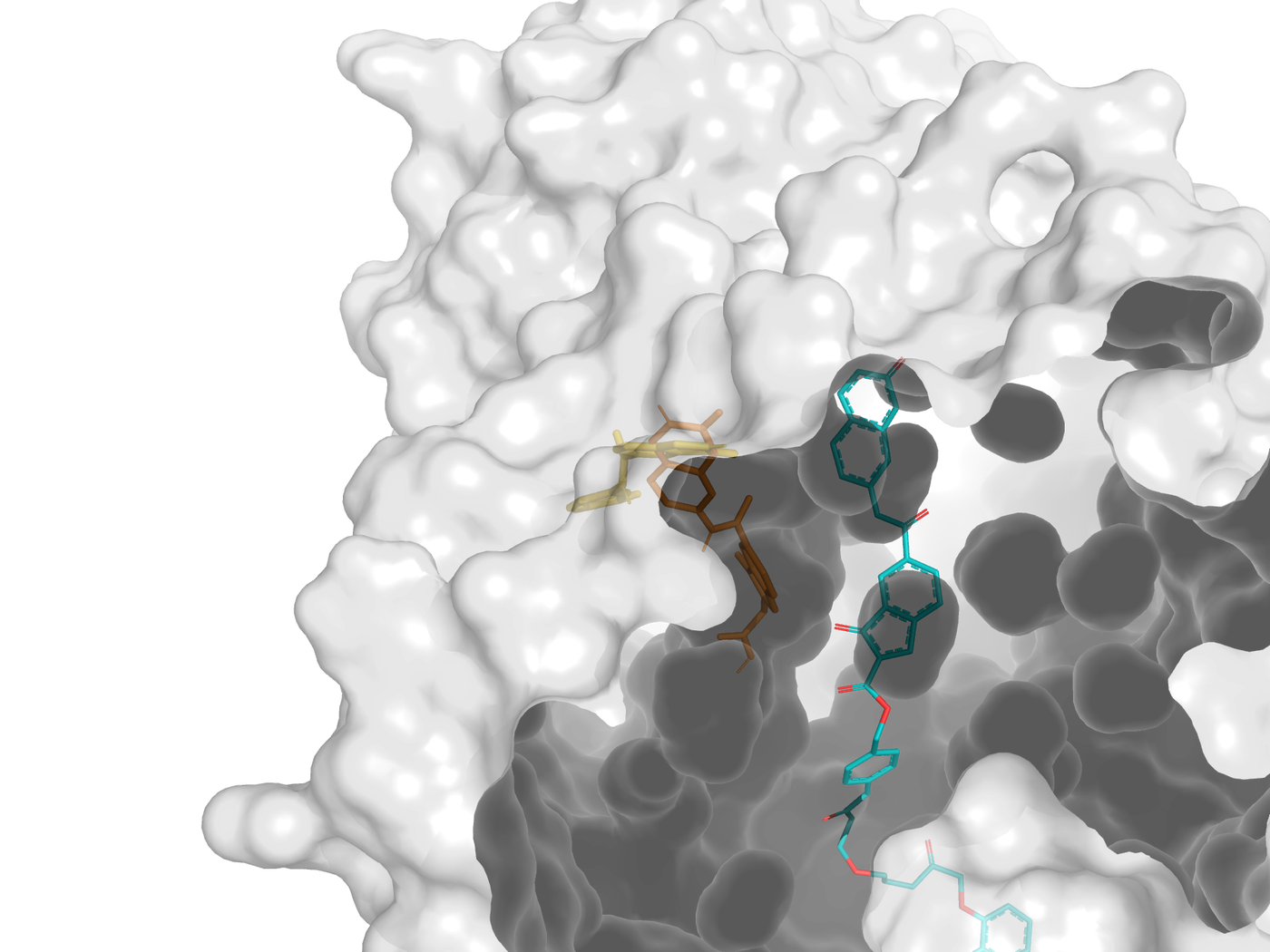
Close-up of a lead candidate engaging the active-site cleft of an essential bacterial enzyme — the kind of structural fit that translates computational models into validated drug candidates.
Platform Potential
Our technology platform enables rapid development of therapeutics against several distinct bacterial targets with built-in sepsis prevention:
Lead program: Antibiotic-resistant gonorrhea (STI market $2.4B + sepsis prevention)
Cystic fibrosis: Chronic Gram-negative lung infections with reduced inflammatory burden
Sepsis therapeutics: Preventive treatment for high-risk surgical and ICU patients
Platform expansion: Additional Gram-negative pathogens and sepsis indications
Key Milestones
✅ 2026 Q1 (Complete): Computational validation across 8 WHO priority and biodefense pathogens; 50 ns MD simulations confirm lead candidate binding stability
✅ 2026 Q1 (Complete): NVIDIA Inception Program accepted; co-signed IDSA congressional appropriations letter (FY2027 AMR funding)
✅ 2026 Q2 (Complete):Seven provisional patent applications filed with USPTO covering the full therapeutic platform (small molecules, peptide macrocycles, siderophore-mediated delivery, dual peptidoglycan-synthesis inhibitors, LPS-neutralization biologics, and pharmacokinetically-coordinated combination therapy); computational resistance profiling confirms lead candidates retain activity against dominant clinical resistance mutations
✅ 2026 Q2 (Complete): DARPA BTO Proposal Abstract submitted (HR001126S0003) — 24-month, $1.85M program integrating the full platform into a single therapeutic
2026 Q3: Lead compound synthesis; MIC/MBC testing and antibacterial activity profiling
2026 Q4: Lead optimization; binding assays (SPR/ITC); IND-enabling study design
2027: IND-enabling studies; Series A fundraising
Intellectual Property
Febris Therapeutics has established priority dates across its full therapeutic platform through seven provisional patent applications filed with the USPTO between April 3 and April 21, 2026, covering small molecule antibacterials, peptide macrocycle inhibitors, siderophore-mediated delivery, dual peptidoglycan-synthesis inhibitors, LPS-neutralization biologics, and pharmacokinetically-coordinated antibiotic combination therapy.
All applications are supported by ALCOA+-compliant computational data (SHA-256 integrity verified). Non-provisional filings and PCT international applications are targeted for Q1–Q2 2027.
Funding & Partnerships
We are actively seeking:
NIH SBIR grants (Phase I: $300-400K)
DoD SBIR grants (biodefense applications)
Strategic partnerships with pharmaceutical companies
Technology partnerships with AI/cloud providers (NVIDIA, Microsoft, Google, AWS)
Angel/seed investment for experimental validation
Equity Crowdfunding — Planned 2026
Febris Therapeutics is preparing to launch an equity crowdfunding campaign under Regulation Crowdfunding (Reg CF), opening participation to both accredited and non-accredited investors as we advance our AI-designed therapeutics toward experimental validation.
Join the waitlist to be notified when the campaign opens.
Thanks — you're on the list. We'll email you when the Febris equity crowdfunding campaign opens.
This page does not constitute an offer to sell or a solicitation of an offer to buy securities, nor shall there be any sale of securities in any jurisdiction in which such offer, solicitation, or sale would be unlawful. Any securities offering by Febris Therapeutics, Inc. will be made only through an SEC-registered funding portal pursuant to Regulation Crowdfunding (17 CFR § 227). Investment in early-stage companies involves substantial risk, including the possibility of losing the entire amount invested. Forward-looking statements reflect current expectations and are subject to change without notice.
Market Opportunity
Target Markets
Antibiotic resistance: $100B+ global market by 2030
Sepsis therapeutics: $4.2B market growing to $8.6B by 2030
Gonorrhea treatment: $2.4B market (600K+ cases/year in US alone)
Hospital-acquired infections: $10B+ market (A. baumannii, P. aeruginosa)
Biodefense: Government procurement for critical pathogens and sepsis countermeasures
Competitive Advantages
AI-driven speed: Months vs. years for traditional drug discovery
Dual mechanism: Direct antibacterial action PLUS sepsis cascade prevention
Novel target class: Essential outer membrane machinery (distinct from traditional antibiotics, reduces resistance)
Pan-bacterial platform: Single technology applicable to multiple WHO priority pathogens
De-risked development: Computational validation identifies lead candidates before costly experiments
Sepsis market entry: Addresses $4.2B unmet need with novel approach
Team & Advisors
Stephen Manogue — Founder & CEO
Stephen is a biopharmaceutical executive with thirty years in anti-infectives, building and commercializing specialty pharmaceutical companies. He co-founded Zavante Therapeutics around the exclusive U.S. license to IV fosfomycin, advanced it through NIAID-supported development into FDA Phase 1, and led the sale of the company in May 2015, retaining royalty rights. That asset is now CONTEPO™ — acquired by Nabriva Therapeutics in 2018 and by Meitheal Pharmaceuticals in 2024, FDA approved in October 2025 and commercially launched in April 2026. Earlier, as Senior Director and Antibiotic Franchise Lead at Élan Pharmaceuticals, he held full P&L accountability for the hospital antibiotic franchise, delivering $124M+ EBITA per annum and growing Azactam® (aztreonam) to $108M in 2008 — three years after U.S. patent expiry — by positioning the franchise within CMS pneumonia quality guidelines. Stephen holds a B.A. from Fairleigh Dickinson University and an Executive Certificate in Artificial Intelligence from MIT Sloan School of Management.
Febris Therapeutics is assembling a Scientific Advisory Board with expertise in infectious disease, structural biology, and clinical development. Advisor announcements coming soon.